Organizations that actively develop emotional intelligence among their employees often experience benefits that extend far beyond interpersonal relationships.


Artificial Intelligence (AI) is no longer a futuristic concept. It is already transforming how organizations operate, communicate, and make decisions. From generating reports and summarizing meetings to automating repetitive administrative tasks, AI is helping businesses improve efficiency and productivity at an unprecedented pace.
With these rapid advancements, many professionals are asking a familiar question: “Will AI replace my job?”
While AI will undoubtedly change the nature of work, it is unlikely to replace the qualities that make people effective leaders, collaborators, and problem-solvers. In fact, as AI becomes more capable, the skills that distinguish humans from machines are becoming increasingly valuable.
One of those skills is emotional intelligence.
AI is remarkably good at processing information.
It can analyse large datasets, identify patterns, generate content, and provide recommendations within seconds. It can help organizations work faster and make better-informed decisions.
However, there are important aspects of work that technology cannot replicate.
AI cannot build trust with a struggling employee.
It cannot genuinely empathize with a frustrated customer.
It cannot navigate the emotions that arise during organizational change.
It cannot inspire confidence during uncertainty or strengthen relationships through authentic human interaction.
While AI can support decision-making, people still rely on human judgment, empathy, communication, and leadership when working through complex situations.
These human-centered capabilities are becoming increasingly important as workplaces become more digital and interconnected.

Emotional intelligence, often referred to as EQ, is the ability to recognize, understand, manage, and respond effectively to emotions, both our own and those of others.
It is commonly associated with several key competencies:
Contrary to popular belief, emotional intelligence is not about being emotional. Rather, it is about understanding emotions and using that understanding to communicate effectively, build relationships, manage conflict, and make better decisions.
Employees with strong emotional intelligence are often better equipped to work with diverse teams, adapt to change, and navigate challenging workplace situations.
Imagine two supervisors facing the same workplace issue.
In both cases, a heavy component falls from a storage rack and narrowly misses an employee. Fortunately, nobody is injured.
The first supervisor immediately gathers the team and begins looking for someone to blame.
“What happened?”
“Who was responsible?”
“Why wasn’t this reported earlier?”
Employees remain silent. Nobody volunteers information. The meeting ends quickly, but so does the opportunity to learn from the incident.
Several workers had previously noticed warning signs, including loose bolts and an overloaded rack, but they now feel even less comfortable raising concerns in the future.
The second supervisor takes a different approach.
Instead of focusing on blame, the supervisor begins by ensuring everyone is safe.
Then comes a simple question:
“Can we talk about what happened and how we can prevent it from happening again?”
As the discussion unfolds, employees begin sharing observations they had previously kept to themselves. The team identifies multiple contributing factors, implements corrective actions, and improves communication moving forward.
Both supervisors had access to the same information. Both understood workplace procedures. Both wanted to prevent future incidents.
Yet their outcomes were completely different. The difference was not technical knowledge. The difference was emotional intelligence.
This example highlights a reality that exists in virtually every workplace.
Many organizational challenges are not caused by a lack of technical expertise. Instead, they stem from communication breakdowns, poor relationships, misunderstandings, resistance to feedback, and a lack of trust.
The second supervisor demonstrated several characteristics associated with emotional intelligence:

Rather than assuming they knew the answer, they encouraged employees to share their perspectives.
They understood that people are more likely to speak openly when they feel respected and heard.
Instead of reacting with frustration, they remained calm and focused on understanding the situation.
They created an environment where employees felt comfortable contributing information that could improve outcomes.
These skills may seem simple, but their impact can be significant.

Organizations that actively develop emotional intelligence among their employees often experience benefits that extend far beyond interpersonal relationships.
Emotionally intelligent employees communicate more effectively because they understand both the content and emotional context of conversations.
This reduces misunderstandings and strengthens collaboration.
Teams function more effectively when members can understand different perspectives, manage disagreements professionally, and work towards shared goals.
Emotionally intelligent individuals are more likely to address problems constructively rather than allowing tensions to escalate.
Organizations face constant change. Employees with strong emotional intelligence tend to manage uncertainty, stress, and change more effectively.
People are more engaged when they feel respected, valued, and understood. Emotional intelligence contributes to stronger workplace relationships and a more positive organizational culture.
Technical expertise may help someone become a manager. Emotional intelligence often determines whether they become an effective leader.
Leaders with strong EQ are generally better at motivating teams, managing change, providing feedback, and building trust.
Whether interacting with customers, clients, suppliers, or stakeholders, emotional intelligence helps employees build stronger and more productive professional relationships.
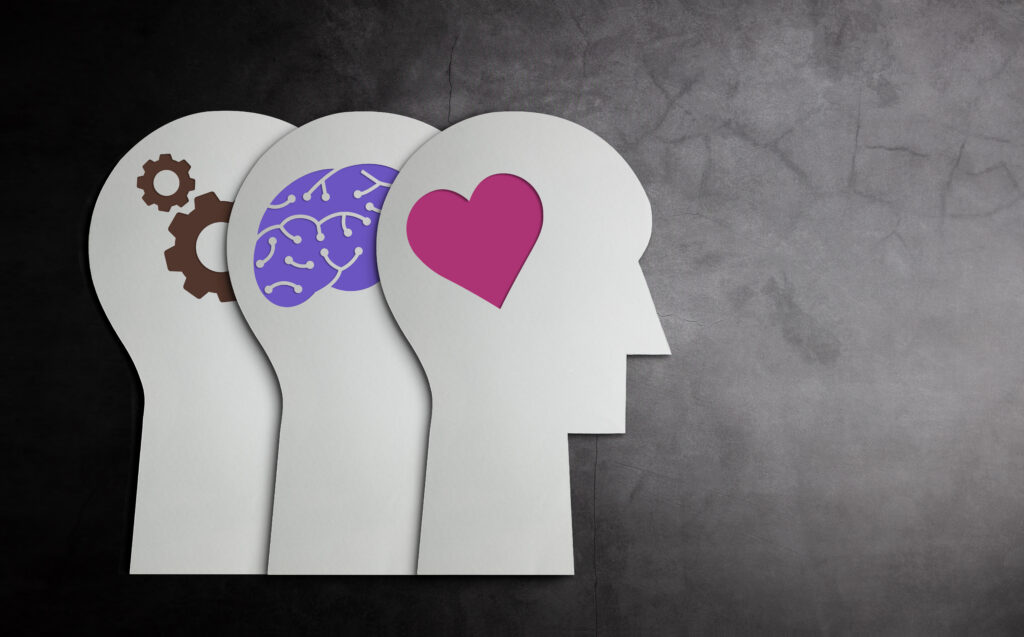
For decades, organizations focused heavily on technical expertise and professional qualifications.
Those capabilities remain important.
However, as AI increasingly handles routine and analytical tasks, the competitive advantage is shifting toward skills that technology cannot easily replicate.
Organizations still need people who can:
These are all areas where emotional intelligence plays a critical role.
In the future workplace, technical skills may help employees work alongside AI. Emotional intelligence will help them lead, collaborate, and create value beyond what AI can deliver.
The good news is that emotional intelligence is not a fixed trait.
Like any professional competency, it can be developed through awareness, practice, and intentional effort.
Organizations can support EQ development by:
Employees can also strengthen their own emotional intelligence by becoming more aware of their reactions, seeking feedback, and making a conscious effort to understand different perspectives.

Artificial Intelligence will continue to transform how work is performed.
Yet despite all of its capabilities, AI cannot replace the human qualities that drive trust, collaboration, leadership, and meaningful relationships.
As organizations prepare for the future of work, emotional intelligence is becoming more than a desirable soft skill. It is emerging as a critical business capability that influences communication, engagement, adaptability, leadership effectiveness, and organizational performance.
The future workplace will not be defined by AI alone.
It will be shaped by people who know how to combine technological capability with emotional intelligence.
In a world where machines are becoming increasingly intelligent, the ability to understand and connect with people may become the most valuable skill of all.